

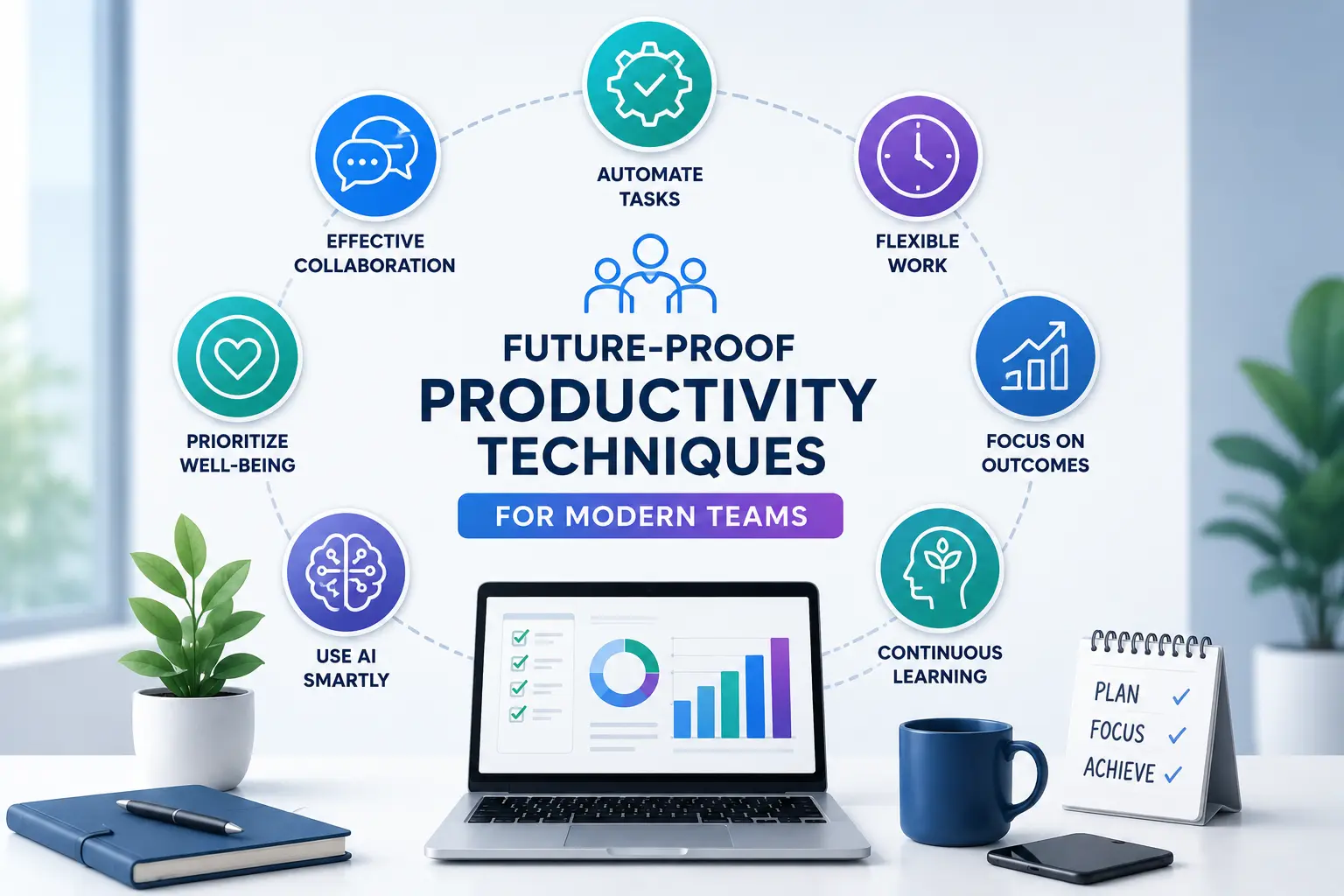
As technology continues to change, the workplace is evolving with new ways of collaborating remotely and meeting the changing needs of employees. The new types of teams that exist require productivity strategies that will enhance their productivity now and also help prepare organizations for future challenges. Organizations that employ flexible and sustainable working practices will be in a stronger position to compete and provide for future growth.
Here are some techniques for future-proofing productivity so that modern teams can maximize performance.
Utilizing Digital Collaboration Tools
Digital collaboration tools have made it easier for employees to work together on projects, connect via communication and file-sharing programs, and plan their work.
- Some of the most well-known productivity software will help teams:
- Schedule their work and manage their due dates.
- Hold virtual meetings.
- Share documents with each other in real-time.
- Enhance communication with other teams or departments.
Utilizing the appropriate digital collaboration tools, teams will remain in touch with one another regardless of the location of either team member.
Automating Tasks That Occur Frequently
Productivity today relies heavily on automation. Many repetitive administrative jobs are wasting important time that workers should be able to spend more strategically.
Areas within the business that can be automated include:
- E-Mail responses
- Data entry
- Appointment scheduling
- Reporting
- Customer support
Increased efficiency through automation decreases the likelihood of mistakes from humans and increases overall productivity.
Concentrate On Performance Based Outcomes
Many new types of teams are beginning to adopt performance-based outcome models rather than use traditional methods of measuring productivity.
Using a performance-based outcome approach offers:
- Achieving objectives,
- Providing quality services,
- Completing project deadlines on time,
- Increasing customer satisfaction,
- Helping achieve business goals.
Focusing on the actual results accomplished rather than the amount of time worked creates an environment where employees can work efficiently and hold themselves accountable for their performance.
Promote ongoing learning
The fast speed of technological change requires employees to be constantly developing new skills. Companies that invest in learning for their employees are better placed to handle what comes along in the industry.
Continuous learning may include
- Courses online.
- Certifications (professional).
- Workshops & training.
- Opportunities for cross-functional learning.
- Leadership development initiatives.
A learning environment allows teams to adapt quickly and stay competitive.
Artificial Intelligence in the Workplace
Teams can benefit greatly from using Artificial Intelligence (AI) to increase their productivity. There are many ways to utilize AI, including planning, collaborating, creating content, and analyzing data.
Here are some team specific examples of how you can use AI:
- Meeting Summaries
- Automated Report Generation
- Drafting of Content
- Business Data Analysis
- Customer Interaction Improvements
By utilizing AI, employees can spend more time on developing creative ideas and fulfilling tasks that add high value to the organization.
Developing Effective Communication Habits
Effective communication is one of the most essential requirements for team productivity and success. Poor communication results in delays, errors, and ultimately, less productive teams.
- Organizations can promote effective communication by:
- Regularly Scheduling Team Meetings
- Communicating Clear Expectations to Team Members
- Utilizing Collaborative Tools
- Encouraging All Team Members to Provide Feedback
- Keeping Records of Important Information From Team Meetings
The communication you have with your team will impact the success of your team by increasing clarity within your organization.
Build Agile Teams
Organizations are learning to leverage agility today because it provides vehicles to quickly adapt to changing market conditions. An effective way that businesses achieve this is by establishing agile teams that leverage flexibility and the ability to consistently improve through collaboration, teamwork, and ongoing feedback.
The following are some examples of the characteristics of agile teams:
- Speedy decision-making
- Strong collaboration with one another
- Ability to adjust as necessary to rapid changes
- Continually giving each other feedback on their respective work
- Continuously working toward improving the processes associated with their respective work
Agility offers resilience to businesses that operate in an ever-changing global marketplace.
Conclusion
Building a sustainable way to improve your productivity will require you to do more than work at an increased pace alone…By utilizing modern technology, automating wherever possible, participating in continuous learning, and showing concern for the well-being of employees, organizations that take advantage of forward-thinking productivity strategies will have a much greater ability to manage change, improve performance, and flourish in the future emerging workplace.