

In today’s day and age, technology is a critical component of successfully running a business. By utilizing the proper tools for their business, small businesses will increase productivity, improve the customer experience and develop options for sustainable growth in the future. Although small businesses typically have limited budgets; investing in the right technology will allow them to be more efficient and competitive in an increasingly digital business landscape.
Below you will find several of the most significant technological tools to consider implementing into every small business.
Trustworthy Computers and Gear
Having trustworthy hardware is essential to every company. Modern laptops, desktops, and printers with accessories will help all employees, regardless if they work in a workplace setting or remotely, to be productive and reduce downtime.
Although quality equipment may be initially costly, you’ll usually recoup your investment over time due to the decreased need for repairs and better overall performance.
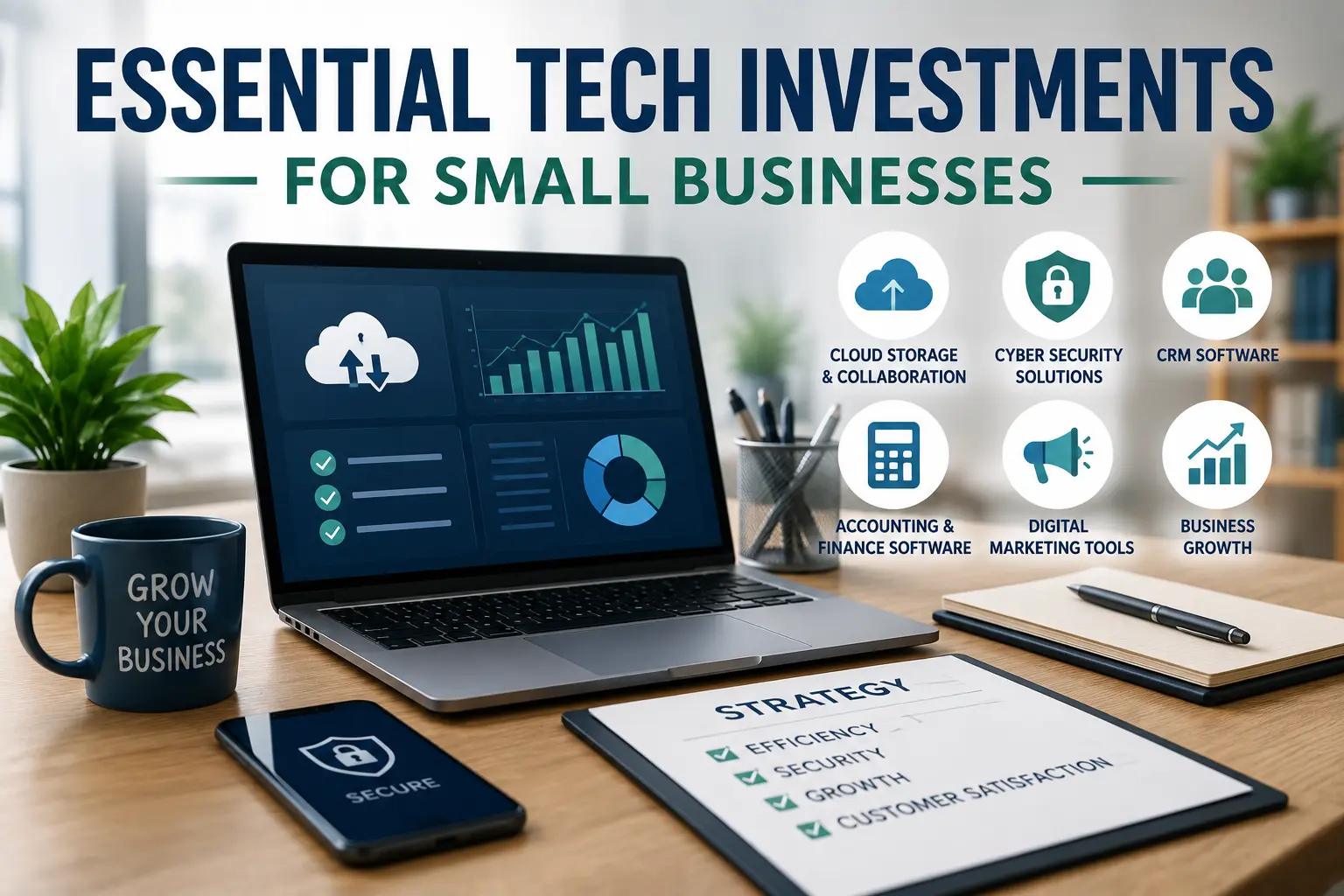
Cloud Storage & Collaboration Tools
Cloud is changing how businesses handle their data. Files are being securely stored for teams to work together on in real-time from any location, thanks to solutions like Google Workspace or Microsoft 365.
There are many benefits of cloud technology, for instance:
- Better team work
- Backups (automatic)
- More secure data
- Reduced need for physical storage
- Improved remote work capabilities
These tools are a great option for growing businesses with remote teams.
Cyber Security Solutions
Cyber Threats are on the rise, so it is crucial that small businesses invest in Cyber Security. Phishing, Ransomware, and Data Breaches are a concern for even small companies.
Some of the basic Cyber Security measures are:
- Antivirus Software
- Firewalls
- Multi-Factor Authentication
- Password Management Tools
- Employee Cyber Security Training
To keep your customers’ data and your company’s information safe you will continue to build trust, and you will avoid costly disruption.
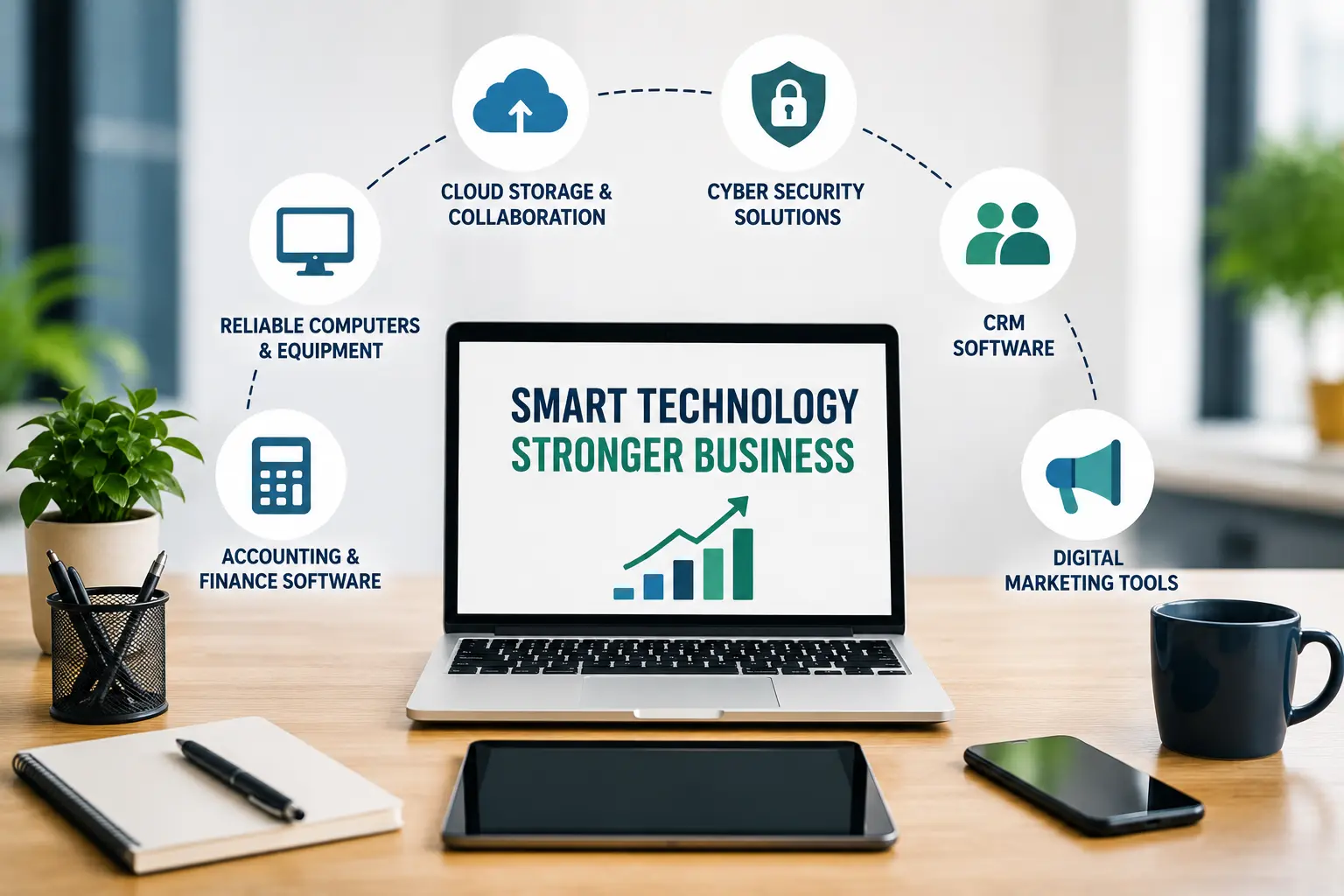
CRM (Customer Relation Management) Software
Developing solid relationships with customers is crucial for the growth of a business. CRM software enables businesses to manage customer data, track sales opportunities and enhance communication with clients.
A CRM system can offer:
- Enhanced customer service
- Better Sales Tracking
- Automated follow-ups
- More targeted marketing campaigns
- Improved customer retention
It’s possible to build better long-term relationships by getting a better understanding of what customers need.
Accounting and finance software
Accountants use accounting software programs to help run their practices more efficiently. Many accountant users implement different systems for conducting their practice and for handling transactions with clients.
Using digital accounting tools allow business owners:
- Free time
- Keep accurate records
- Better prepare for tax returns
- Stay aware of current cash flow
Automated processes provide an opportunity for owners to spend less time performing repetitive administrative functions and devote the majority of their time to growing their businesses.
Digital Marketing Tools
Every business needs an online presence in today’s marketplace. Investing in the right digital marketing tools can allow a company to reach more customers and increase brand recognition.
Examples of some of these marketing technologies are:
- Email Marketing Platforms
- Social Media Management
- Search Engine Optimization Software
- Website Analytics
- Content Creation Tools
These types of tools will help a business develop an understanding of how customers behave and will assist in creating improved marketing campaigns.
Conclusion
If you are a small business owner and want to achieve success over the long term, then you need to invest in technology. Utilizing the proper software and system solutions will lead to improved business capabilities for small businesses while also reducing their total business operating costs, increasing revenues generated by their products and services, as well as providing a better customer service experience.
Small business owners must make strategic and well-thought-out technology investments at this time to help ensure that their businesses will be positioned for sustainable growth over time and be able to compete with other businesses in a dynamic, competitive marketplace.