


For decades, search engines have been the starting point for finding information online. Whether people wanted to learn something, compare products, find a recipe, or solve a technical problem, they usually typed a few keywords into a search engine and browsed through a list of links.
Artificial intelligence is now changing that experience.
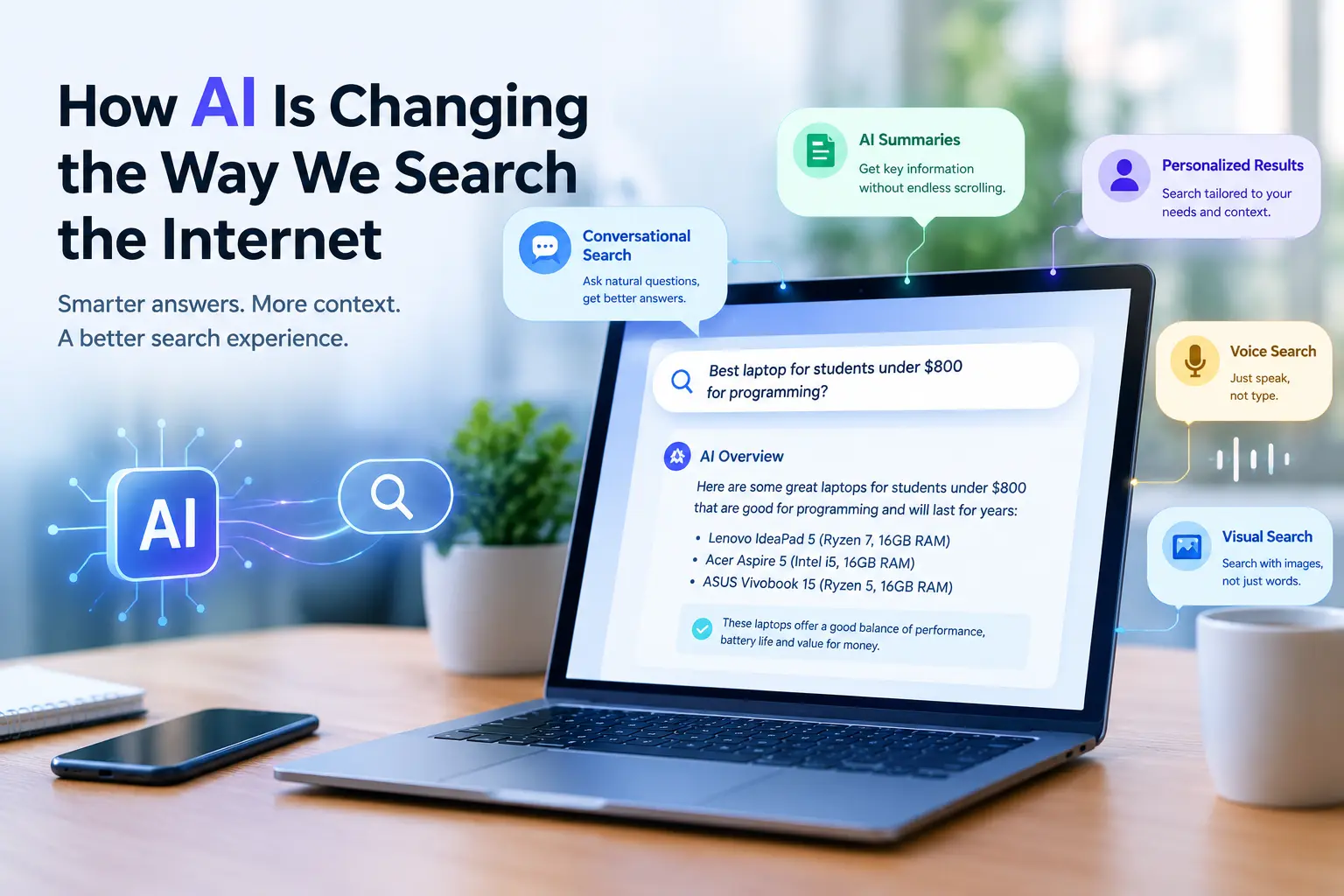
Instead of simply showing users pages that might contain an answer, AI-powered search tools can understand questions, summarize information, provide explanations, and even help users complete tasks. This shift is changing not only how people search but also how websites create and organize content.
From Keywords to Conversations
Traditional search relies heavily on keywords. For example, someone looking for advice about buying a laptop might search for “best laptop for students.”
With AI-powered search, the same person might ask:
“I’m a college student studying computer science. What laptop should I buy under $800 that can handle programming and last for several years?”
AI can understand the context behind the question and generate a more personalized response.
This makes search feel less like entering keywords into a database and more like having a conversation with an assistant.
AI Can Summarize Information Faster
One of the biggest changes brought by AI is the ability to summarize information.
Instead of opening several websites and reading through multiple articles, users can increasingly receive a concise overview directly in their search experience. AI systems can combine information from different sources and present the main points in an easy-to-understand format.
This can save time, especially when researching complicated subjects.
However, users should still check important information against reliable sources. AI-generated answers can sometimes contain outdated, incomplete, or incorrect information.
Search Is Becoming More Personalized
AI can also make search results more relevant to individual users.
Search systems can analyze factors such as the wording of a question, previous interactions, location, and context to better understand what someone is looking for.
For example, a search for “best restaurants near me” has a very different meaning from “best restaurants in New York.” AI can use context to provide a more useful response rather than simply matching words.
Personalization could become even more important as AI assistants learn to understand users’ preferences and recurring needs.
Visual and Voice Search Are Growing
AI is also changing how we interact with search engines.
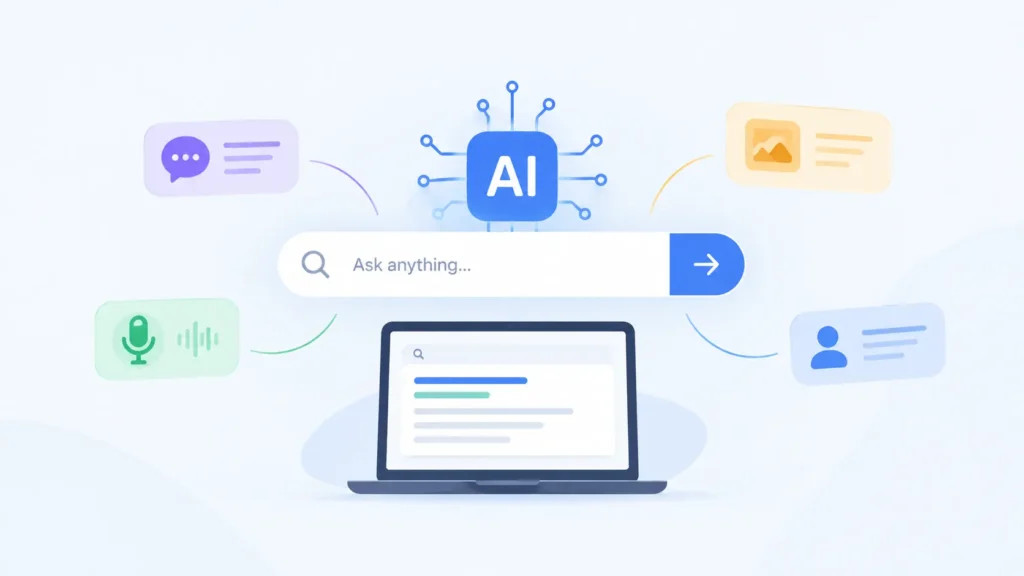
Voice search allows users to ask questions naturally instead of typing them. Meanwhile, image-based search allows people to upload or capture an image and ask an AI system to identify an object, explain what it sees, or find related information.
Imagine taking a photo of an unfamiliar plant and asking what it is, or uploading a screenshot of a computer error and asking how to fix it.
These capabilities make search more accessible and useful in everyday situations.
What This Means for Websites
The rise of AI-powered search is also changing the way websites approach SEO.
Simply targeting keywords may no longer be enough. Websites need to create useful, trustworthy, original content that directly answers users’ questions.
Clear explanations, first-hand experience, accurate information, helpful examples, and strong expertise can become increasingly important.
Websites also need to think about questions users might ask conversationally rather than focusing only on short search phrases.
The Future of Search
AI isn’t necessarily replacing traditional search engines. Instead, it is transforming what search can do.
The future may involve a combination of traditional search results, AI-generated answers, conversational assistants, voice interaction, and visual search. Users may spend less time searching through dozens of pages and more time asking increasingly specific questions.
For internet users, this means finding information could become faster and more conversational. For websites and content creators, it means adapting to a search environment where helpfulness, accuracy, context, and trust matter more than ever.
AI is changing search from a simple process of finding links into a more intelligent way of discovering and understanding information—and this transformation is only beginning.