


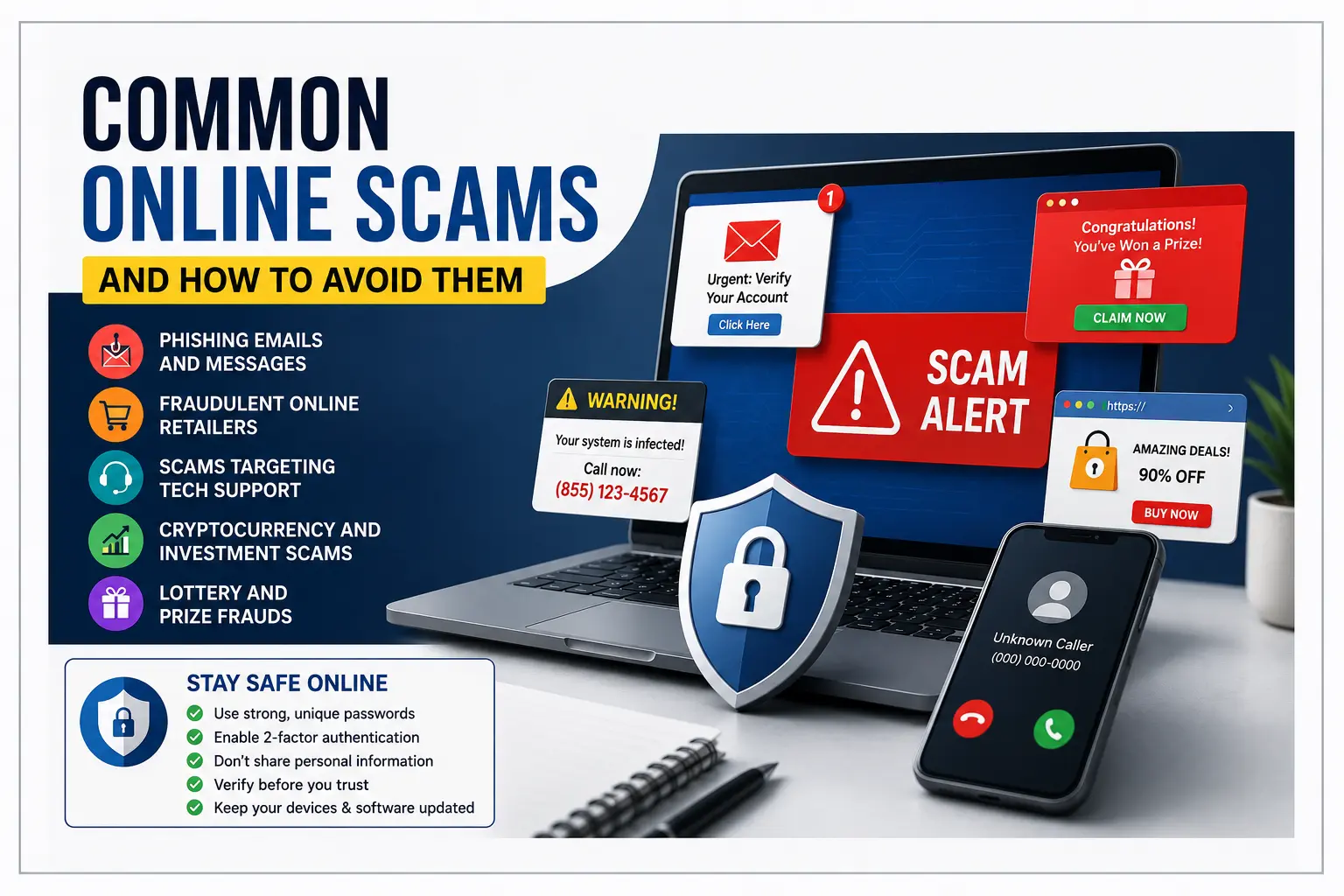
The internet has simplified day-to-day activities such as shopping, communicating, and working from home. However, because of this increased complexity also means the rise in the number of cybercriminals looking to take advantage of unsuspecting people where it will be difficult to differentiate between a legitimate website/email/message.
Knowing and being aware of the most prevalent types of online scams can prevent you from losing money or your personal information. Below are examples of common internet scams and methods for avoiding them.
Phishing Emails and Messages
Scammers use phishing tactics, such as emails, text messages, or posting messages on social media to fraudulently represent trusted organizations like banks, companies, and government organizations in an attempt to deceive victims into clicking a link, verifying their accounts, or providing personal information.
Some steps to protect yourself include:
- Verify the sender’s email address
- Do not click on a link that you are not sure about
- Do not give out passwords or one-time verification codes
- Go to the website directly instead of clicking on a link from an email.
Fraudulent Online Retailers
It is becoming more common to find scams in online shopping. Online retailers will copy the name, look and feel of a popular retailer’s site, then display extremely low prices in order to get consumers to buy products from them.
Protect yourself by:
- Search for customer reviews about the site from reputable review sites.
- Look for HTTPS as part of the website address.
- Watch for “too good to be true” specials/prices.
- When using a credit/debit card, always use a secure payment method.
Scams Targeting Tech Support
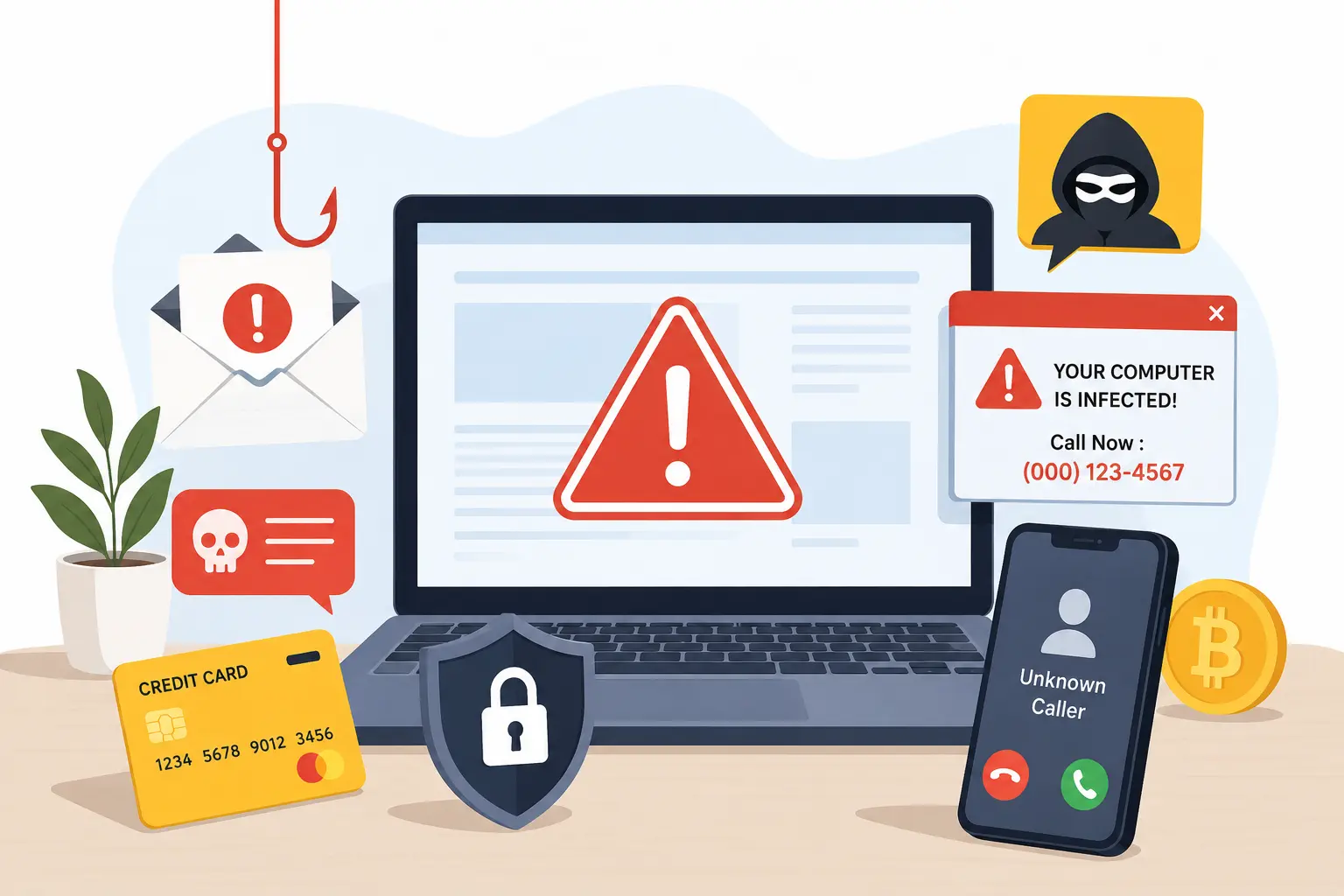
Scammers will use fake pop-up warnings to convince users that their computer is infected or has other issues and that they must call to support or install something the scammer will have access to.
You Can Protect Yourself by:
- If you see any suspicious pop-up advertisement do not call the listed phone number. You may also want to try closing pop-up.
- Contact your company’s official technical support channels and only use those.
- Never allow any stranger access to your computer remotely for any reason.
- Ensure your antivirus software is current with updated virus definitions.
Cryptocurrency and Investment Scams
Conmen tend to use the internet to promote “sure thing” or “fast payoff” type investment schemes. Many do this using social media and actor endorsements.
How To Avoid An Investment Scam:
- Research any investment before putting your money into it.
- Don’t believe the guaranteed profits.
- Before you invest, check out the financial platforms.
Lottery and Prize Frauds
It’s great to get a message saying you’ve won a prize, but many of these messages are fake. They might request that you pay processing fees or give other personal information before you can claim the “prize.”
Keep in mind:
- You don’t have to pay to claim winnings in real contests.
- Disregard unexpected prize notices.
- Never share your financial details.
- Check the companies’ official websites for sales.
Account security and password safety tips
Having a strong password, as well as good account security, will greatly decrease your odds of being victimized.
Best Practice:
- Use strong, unique passwords on all accounts
- If possible, enable 2-factor authentication
- Change your passwords on a regular basis
- Check your bank statements often to see if anything looks unusual
- Keep your devices & software up-to-date with their latest security patches
Final Thoughts
Internet fraud keeps changing but education is your best defence against it. It is worth taking a few extra moments to double check emails, websites and financial offers to prevent large losses and identity theft. You can take advantage of the internet, but there’s a way to stay safer from cyber-crime while doing so. The best way to keep yourself safe online is by remaining aware of what’s going on around you, being sceptical about everything and practicing sound cybersecurity behaviours.